





How to Choose Kosher Bamboo Schach for Sukkot 2026: A Complete Guide

You've got the sukkah frame. You've got the walls. Now comes the part that actually makes it a sukkah: the schach.
For a lot of people, sukkah schach is an afterthought. You grab whatever worked last year, throw it on top, and move on. But if you've ever dealt with schach that dried out too quickly, fell apart mid-holiday, or turned out to be halachically questionable, you know it's worth spending ten minutes thinking this through before Sukkot 2026.
This guide covers everything you need to know - what makes schach kosher, why bamboo has become the standard, and how to choose the right mat for your sukkah.
What Is Schach and Why Does It Matter?
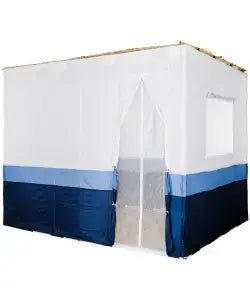
Schach is the roof covering of the sukkah, and halachically speaking, it's the most important element. You can have imperfect walls and still have a kosher sukkah. But without valid schach, you don't have a sukkah at all, you have a tent.
The Torah requirement is that the schach be made from natural, unprocessed plant material, something that grew from the ground and has been detached from the ground. That rules out most synthetic materials, metal, plastic, and anything that was manufactured into a finished product (like wooden boards that were planed and joined).
Practically, this means your schach needs to be:
• From a plant source (wood, bamboo, reeds, palm branches, branches)
• No longer attached to the ground
• Not made into a finished vessel or utensil
• Laid loosely across the top of the sukkah - not attached to the frame in a way that would make it permanent
Bamboo checks every box, which is why it's become the most widely used schach material among observant families.
Why Bamboo Schach Has Become the Standard
Bamboo schach has largely replaced older alternatives - palm branches, reed mats, evergreen branches, for practical reasons.
First, it's consistent. A quality bamboo mat gives you even, reliable coverage without gaps or bare spots. Second, it stores well. Unlike fresh-cut branches, bamboo mats roll up compactly and can be reused year after year. Third — and this matters for busy families — it goes on fast. You unroll the mat across your frame, secure it lightly, and you're done.
The Sukkah Market Premium Bamboo Schach Mats are hand-woven from natural bamboo, certified kosher by recognized rabbinical authorities, and designed to work with standard sukkah frames, including all of the kits in the Sukkah Market sukkah collection.
Understanding the Kosher Certification
Not all bamboo schach on the market is created equal from a halachic standpoint. The question isn't just whether bamboo is acceptable as a material (it is) — it's whether the specific product was processed in a way that maintains its validity.
A few things to check when evaluating any schach product:
• Is it certified by a recognized rabbinical authority? Look for a hechsher from a rabbi or rabbinical organization, not just a marketing claim.
• Is it made from 100% natural plant material? Some mats use synthetic backing or wire to hold the weave together. Wire and synthetic materials can render schach invalid.
• Has it been processed in a way that doesn't make it a finished "vessel"? Mats that are simply woven together without being formed into a rigid structure are generally fine.
The kashrut page on Sukkah Market's site explains the specific certifications in more detail. If you have questions about your particular situation, your rabbi is always the right address.
How Much Schach Do You Need?
This is where a lot of people get caught short. You need enough schach to cover the majority of the sukkah's roof — and it needs to be dense enough that shade from the schach predominates over the sunlight that passes through.
The halachic rule is that tzilato meruba me'chamatah — the shade inside the sukkah should be greater than the sunlight. In practice, this means you don't want large gaps or sparse coverage.
To calculate how much schach you need:
• Measure the length and width of your sukkah's roof opening
• Add about 10–15% to account for overlapping mats and any irregularities in your frame
• For a standard 10x10 sukkah, two to three standard-width mats typically provide sufficient coverage
If you're unsure about sizing, the size guide can help you figure out which configuration works for your sukkah dimensions.
Schach and Support: What You Need Besides the Mats
Bamboo mats are flexible — they need something to rest on across the width of your sukkah. Most sukkah frames have rails at the top, but if your frame spans more than a few feet without support, the mats can sag.
The solution is bamboo support poles (also called schach poles or s'chach poles). These are laid perpendicular to the mats, resting on the sukkah's top frame, and give the mats a firm surface to lie on. They're made from natural bamboo, so they're halachically valid to be part of the roof covering.
Sukkah Market's bamboo schach includes bamboo support accessories with select kits. If you're purchasing schach separately, check whether support poles are included or whether you need to order them alongside the mats.
Caring for Your Schach Year to Year
Bamboo schach is designed to last multiple seasons if you store it properly. A few basic rules:
• Make sure the mats are completely dry before rolling them up for storage. Rolling damp mats leads to mold.
• Roll loosely — tight rolling can crack the bamboo over time.
• Store in a cool, dry location out of direct sunlight.
• Check the mats before Sukkot each year. Some natural shedding is normal; significant deterioration or mold is a sign it's time for new mats.
With proper storage, a quality bamboo schach mat can last three to five Sukkot seasons or more.
One More Thing: Laying the Schach Correctly
Even the best schach won't work if it's laid incorrectly. A few quick reminders before Sukkot:
• The schach must be placed last — after the walls are up. The halachic order matters.
• It should not be tied down permanently. The mats should rest on the frame or support poles, not be attached in a way that makes the sukkah a permanent structure.
• You need to be able to see stars through the schach at night (or at least to have enough sparse coverage to satisfy the requirement). Dense coverage that completely blocks the sky isn't ideal.
For more detail on the structural requirements, the instructions page has assembly guidance that covers the full setup process.
Ready to Order Schach for Sukkot 2026?
If you're setting up for this year, now is the time to make sure your schach is sorted before the season crunch. Browse the Sukkah Market bamboo schach mats and check what's included with your sukkah kit before ordering separately.
Frequently Asked Questions
Is bamboo schach kosher?
Yes. bamboo is a natural plant material that meets the halachic requirements for schach. The key is making sure the specific product is certified by a recognized rabbinical authority and doesn't contain synthetic backing or metal wire that could invalidate it. Sukkah Market's bamboo schach is certified kosher by recognized rabbinical authorities.
Can I reuse bamboo schach every year?
Yes, if stored properly. Roll the mats when fully dry, store in a cool dry place, and inspect them before each Sukkot. Quality bamboo mats typically last multiple seasons.
How do I know how much schach to buy?
Measure your sukkah's roof opening (length x width) and add 10–15% for overlap. For a 10x10 sukkah, two to three standard mats is typically sufficient. When in doubt, a bit of extra coverage is better than running short mid-holiday.
Does schach need to be placed before or after the walls?
After. The walls of the sukkah must be in place before you lay the schach. This is a halachic requirement, not just a practical one - the roof covering is meant to be placed on a standing structure.
What's the difference between bamboo schach mats and evergreen schach?
Both are valid schach options. Bamboo mats are more convenient - they roll up for storage, provide consistent coverage, and are reusable. Evergreen branches are traditional and widely used, but they dry out over the course of the holiday and can't be stored for reuse. For most families, bamboo is the more practical choice.


