


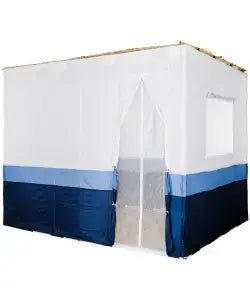




Sukkah Storage and Off-Season Care: How to Protect Your Sukkah Year After Year

Sukkah Storage and Off-Season Care: How to Protect Your Sukkah Year After Year
Taking down the sukkah is never quite as exciting as putting it up. After Yom Tov, everyone is tired, the weather may be changing, and it is tempting to fold everything quickly and deal with it next year.
But a little care now can save a lot of frustration before next Sukkot. Clean walls, dry schach, organized hardware, and proper sukkah storage bags can make next year’s setup smoother, faster, and less stressful.
This guide walks through practical sukkah storage and off-season care for families, shuls, schools, and organizations that want their sukkah to last and stay in good condition from year to year.
Why Sukkah Storage and Off-Season Care Matters
A sukkah is used for a short time each year, but it spends most of its life in storage. That means the way you pack it away has a major impact on how it looks, functions, and holds up over time.
Good off-season care helps prevent:
- Rust or corrosion on metal frames and hardware
- Mildew or odors on fabric walls
- Warping, cracking, or mold on schach
- Missing bolts, straps, connectors, or instructions
- Unnecessary setup delays before Yom Tov
For larger community sukkahs, school sukkahs, or synagogue sukkahs, organized storage is even more important. Multiple people may be involved in setup from year to year, so clear labeling and complete parts storage can prevent confusion.
Start With a Clean, Dry Sukkah
The most important rule of sukkah storage is simple: do not store anything wet.
Even if the sukkah looks dry, check walls, corners, seams, straps, and schach carefully. Moisture trapped in folded fabric or rolled mats can lead to mildew, odors, and damage while the sukkah is sitting in a garage, basement, shed, or storage room.
Before packing the sukkah away:
- Shake off leaves, dirt, and debris from walls and frame pieces
- Wipe down metal poles and connectors with a dry cloth
- Allow fabric walls to air-dry fully before folding
- Remove decorations, tape, zip ties, string, and clips
- Check schach for moisture before rolling or stacking
If it rained during Sukkot, give everything extra drying time. It is better to leave parts open for another day than to pack them away damp.
How to Store Sukkah Walls
Sukkah walls should be folded neatly and stored in a clean, dry place. If the walls are dirty, brush off loose debris first. Avoid folding in wet leaves, food crumbs, tape residue, or anything that can stain or attract pests.
For fabric walls, fold along natural seams where possible. Do not force sharp folds into coated material, and avoid placing heavy items on top of the walls for long periods. If your sukkah uses panels, keep the panels protected from moisture and pressure so they do not get damaged in storage.
A good wall storage routine looks like this:
- Remove all hooks, bungees, ties, or fasteners
- Lay the wall flat and check both sides
- Let it dry completely
- Fold neatly without over-compressing
- Place it in a labeled bag or storage container
If you manage a shul or school sukkah, label each wall by side or section. “Front wall,” “left wall,” and “door side” may sound obvious now, but next Tishrei those labels can save a lot of time.
How to Store the Sukkah Frame and Hardware
The frame is the backbone of your sukkah, so it deserves careful storage. After taking it apart, wipe down poles and connectors to remove moisture and dirt. If any hardware is loose, missing, bent, or damaged, make a note right away instead of waiting until the busy pre-Sukkot season.
Keep small parts together in a sealed bag or container. This may include:
- Bolts
- Screws
- Brackets
- Corner pieces
- Clips
- Straps
- Extra ties or fasteners
Then store that hardware bag inside the main sukkah storage bag or tape it securely to the frame bundle. The goal is simple: when you open your sukkah next year, everything should be in one place.
It is also helpful to keep printed setup instructions with the parts. For repeat users, this may not feel necessary, but if someone else helps set up the sukkah next year, instructions can prevent mistakes.
Schach Storage: Extra Care for a Mitzvah Item
Schach needs special attention because it must be suitable for use on the sukkah. General halachic requirements for schach should always be confirmed with your rabbi, especially if you are unsure about a particular material, condition, or setup.
From a practical care perspective, the main concern is moisture. Kosher-certified schach should be fully dry before storage. If schach is rolled up damp, mold or mildew can develop during the off-season.
For schach mats:
- Let the mat dry completely before rolling
- Roll it loosely rather than crushing it tightly
- Store it off the floor if the area may get damp
- Keep it away from chemicals, pests, and strong odors
- Inspect it before next Sukkot for mold, breakage, or unusual changes
For bamboo poles or loose natural schach, make sure pieces are dry and stored where air can circulate. Avoid sealing damp organic material in plastic for months.
Garage vs. Basement vs. Shed: How to Decide
Not every home or organization has the same storage options. The best place for sukkah storage is dry, stable, and easy to access before next Sukkot.
Garage storage
A garage is convenient and often has enough room for long poles or large bags. The main concern is temperature swings and possible moisture near the floor. Keep sukkah parts elevated on shelves or hooks if possible.
Basement storage
A dry basement can be a good option, especially for walls and hardware. However, if your basement is humid, use caution. Moisture can affect fabric, metal, and schach over time.
Shed storage
A shed may work well for frames and larger items, but it should be weatherproof and pest-resistant. Avoid storing schach where it may absorb moisture or be exposed to rodents or insects.
If you are choosing between locations, prioritize dryness over convenience. A slightly less convenient dry space is usually better than an easy-to-reach damp one.
Use a Simple Labeling System
Good sukkah storage is not only about protection. It is also about making next year easier.
Before putting everything away, label each bag or container clearly. For example:
- Sukkah frame
- Sukkah walls
- Schach
- Hardware and connectors
- Decorations
- Extension parts or extra panels
For synagogues, schools, or organizations with more than one sukkah, include the sukkah size or location on every label. A simple label like “Main entrance sukkah frame” or “Preschool sukkah walls” can prevent mix-ups.
What to Check Before You Store It Away
Taking five minutes to inspect your sukkah after Sukkot can help you plan ahead. Look for anything that may need replacing, repairing, or upgrading before the next season.
Check for:
- Frayed wall ties or straps
- Bent frame pieces
- Missing hardware
- Stains, tears, or mildew on walls
- Damaged or questionable schach
- Parts that were difficult to assemble
If your sukkah felt too small this year, or setup was more difficult than expected, make a note while it is fresh in your mind. Some sukkah systems are expandable, and planning early gives you more time to choose the right solution before the pre-Yom Tov rush.
Off-Season Sukkah Care for Larger Organizations
For shuls, schools, camps, and community centers, sukkah storage often involves larger frames, more wall sections, and multiple volunteers. A little system goes a long way.
Consider keeping a basic inventory sheet with:
- Sukkah size and location
- Number of frame pieces
- Number of wall sections
- Schach quantity
- Hardware list
- Setup notes
- Repairs needed before next year
Store the inventory sheet digitally and place a printed copy in the main storage bag. This helps the next setup team know what they have and what may be missing.
Plan Ahead Before Next Sukkot
The best time to think about next year is right after this year. If you know you need replacement parts, additional storage, new schach, or a larger sukkah, do not wait until the last minute.
Sukkah Market offers premium sukkah kits and Kosher-certified schach with free local delivery. Custom builds are also available, with 7–10 day delivery on custom builds. EZ Lock sukkahs are expandable, with Traditional at 7 ft, Advance at 7.5 ft, and Ultimate at 8 ft. Panel Sukkahs are always 7.5 ft high, while Custom Sukkah wall heights can be 7 ft, 8 ft, or fully custom. EZ Lock custom builds are made in even-number dimensions.
If you are storing your current sukkah and already thinking about next year’s setup, feel free to explore Sukkah Market’s sukkah options or get in touch with questions. A little planning now can make next Sukkot feel much calmer.
FAQ
Can I store my sukkah outside all year?
It is usually better to store your sukkah in a dry, protected indoor or covered space. If outdoor storage is your only option, make sure the sukkah parts are sealed from rain, raised off the ground, and protected from pests and moisture.
How do I prevent mold on schach during storage?
Make sure the schach is completely dry before rolling, stacking, or covering it. Store it in a dry, ventilated area and check it before next Sukkot for any mold, mildew, or damage.
Should I wash sukkah walls before storing them?
If the walls are only dusty, brushing or wiping them down may be enough. If they are stained or dirty, follow the manufacturer’s care guidance and make sure they are fully dry before folding and storing.
Do I need to inspect my schach halachically every year?
It is wise to inspect schach before each Sukkot to make sure it is in usable condition. For specific halachic questions about your schach, its material, or its condition, ask your rabbi.
What is the best way to avoid losing sukkah hardware?
Put all small hardware into a sealed, labeled bag as soon as you take the sukkah down. Store that bag inside the main sukkah storage bag or attach it securely to the frame bundle.


