


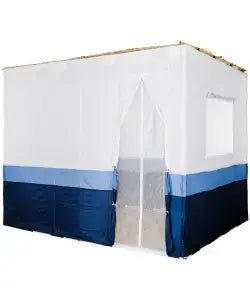





Important Sukkot Customs and Traditions Explained

So, you’ve mastered the basic mechanics of Sukkot. You’ve built a sukkah, you’ve got your lulav and etrog, and you know the main blessings. But then you hear people talking about ushpizin, sukkah hopping, and dipping challah in honey, and you realize there’s a whole other layer to this holiday. These aren’t just quaint traditions; they are the practices that give Sukkot its unique texture and depth. Understanding these Sukkot customs is the key to moving beyond simply observing the holiday and starting to truly celebrate it. Let’s be honest, some of them can seem a little strange at first, but they are all designed to enhance the central themes of the holiday: joy, hospitality, and a connection to our history.
Getting ready for Sukkot 2025? Explore our fast-delivery sukkah kits, bamboo schach, and holiday décor — perfect for your family celebration.
Ushpizin and Welcoming Guests During Sukkot
This is one of the most beautiful and mystical Sukkot traditions. The concept of ushpizin (Aramaic for “guests”) involves symbolically welcoming seven ancestral figures into your sukkah—one for each of the seven nights of the holiday. These “supernal guests” are Abraham, Isaac, Jacob, Moses, Aaron, Joseph, and David. Each night, a different one of these figures is said to be the primary guest, and we invite them in to share our meal and our celebration. Of course, this tradition is also a powerful reminder to welcome actual, physical guests into our sukkah. It’s a holiday centered on hospitality, on sharing your temporary home and your food with friends, family, and even strangers. It’s about creating a space where everyone feels welcome.
Dipping Challah in Honey and Other Sukkot Practices
If you’ve just come from Rosh Hashanah, the practice of dipping challah in honey will feel familiar. We continue this sweet tradition all the way through Sukkot, and even until the end of the holiday season on Simchat Torah. Why? It’s a way of extending the wishes for a sweet new year throughout this entire period of judgment and celebration. Other common sukkot practices include eating foods that are stuffed or wrapped, like kreplach or stuffed cabbage, to symbolize the all-encompassing nature of the sukkah. And, of course, there is a focus on harvest foods, incorporating the fresh fruits and vegetables of the autumn season into your meals.
Simchat Beit Hashoeva and the Joy of Celebration
The Simchat Beit Hashoeva, or “Celebration of the Water-Drawing,” is a tradition that dates back to the time of the Temple in Jerusalem. It commemorates the ancient ceremony of drawing water from the Pool of Siloam to be poured on the altar. The Talmud famously states that “one who has not seen the joy of the Simchat Beit Hashoeva has not seen joy in their lifetime.” While we can no longer perform the water-drawing ceremony itself, the spirit of exuberant celebration continues. Today, it often takes the form of evening gatherings with music, dancing, and singing—a pure, unadulterated expression of the joy that is central to the holiday of Sukkot.
Hoshanot and the Meaning of the Aravot Ceremony
Each day of Sukkot, during the morning service, there is a ceremony called hoshanot. Congregants make a procession around the synagogue, circling the bimah while holding their lulav and etrog and reciting prayers for salvation. The word “hoshana” itself means “please save.” Then, on the seventh and final day of Sukkot, known as Hoshana Rabbah, the ceremony is expanded. After circling the bimah seven times, a bundle of five willow branches, known as aravot, is beaten against the ground. It’s a visceral, slightly jarring ritual. The symbolism is complex, but it’s often understood as a final, cathartic casting off of our sins, with the falling leaves representing the sins we are shedding before receiving our final judgment on this day.
The Fun of Sukkah Hopping in Local Communities
This is a more modern, but no less beloved, custom. Sukkah hopping is exactly what it sounds like: you and your family or friends spend an afternoon or evening walking around your neighborhood, visiting the sukkahs of different families. It’s a progressive dinner, holiday-style. At each stop, you’ll have a small snack or a drink, admire the decorations, and share a few moments of conversation before moving on to the next one. It’s a wonderfully informal and joyful way to build community, to see friends, and to experience the unique character of each family’s sukkah.
From the mystical to the purely social, these Sukkot customs are what transform the holiday into a rich and multi-layered experience. They are the threads that weave together the themes of history, hospitality, and joy, creating a celebration that is as meaningful as it is fun.
Ready to start your own traditions? Whether you need an EZ lock sukkah for easy setup or just want to browse, Sukkah Market has you covered. And if you have any questions, don’t hesitate to contact Sukkah Market.
Frequently Asked Questions About Sukkot Customs
Sukkot customs range from ancient Temple-era rituals to modern community celebrations. Whether you're revisiting the traditions or discovering them for the first time, this guide explains how Jews celebrate Sukkot beyond the sukkah itself. Below, we answer some of the most common questions about these meaningful and joyful Sukkot rituals.
Is ushpizin practiced in all Jewish communities?
Yes, most Ashkenazi and Sephardi communities observe the tradition of ushpizin, symbolically inviting our biblical ancestors into the sukkah each night. However, the format can vary. In many modern or egalitarian communities, Ushpizot—female figures such as Sarah, Miriam, and Esther—are also honored alongside the traditional guests. This evolving practice reflects a broader effort to make ancient Sukkot traditions more inclusive.
Do people still beat the aravot today?
Absolutely. The aravot ceremony remains a powerful and symbolic moment on Hoshana Rabbah, the seventh day of Sukkot. Many synagogues continue the ritual of beating five willow branches against the ground as a form of spiritual cleansing and emotional release. It's one of the more visceral Sukkot rituals explained through a mix of Kabbalistic and halachic tradition.
Is sukkah hopping only for kids?
Not at all! While children love the treats and excitement, sukkah hopping is a beloved custom enjoyed by all ages. Families, teens, and adults use it as an opportunity to socialize, share food, admire each other’s sukkot, and strengthen community ties. It’s one of the most joyful examples of how Jews celebrate Sukkot beyond the sukkah itself—through hospitality, connection, and celebration.


