




The Common Laws of a Sukkah You Need to Know in 2026

Let’s be honest, the phrase “laws of a sukkah” can sound a little intimidating. It conjures images of ancient, dusty texts and complicated, nitpicky rules. And sure, the Talmudic debates about sukkah construction are famously complex. But as you prepare for Sukkot 2026, you’ll find that the basic, practical laws are surprisingly straightforward. They aren’t there to make your life difficult; they’re there to ensure that the sukkah you build is more than just a fort in your backyard. They are the architectural guidelines that transform a simple structure into a sacred space. Understanding the essential laws of sukkah ensures that your temporary dwelling is not only kosher but also deeply connected to thousands of years of tradition.
Need help building a kosher sukkah for Sukkot 2026?
Browse our best-selling sukkah kits, schach mats, and accessories — with fast shipping and rabbinically approved designs.
Sukkah Specifications for a Kosher Structure
So, what makes a sukkah kosher? The core sukkah specifications revolve around a few key principles. First, a sukkah must be a temporary structure. This is the whole point. It’s a reminder of the impermanence of our physical surroundings. Second, it must have at least three walls (though four is common). Third, it must be built under the open sky—not under a tree, a pergola, or the overhang of your roof. And finally, the roof, or schach, has its own set of specific rules. These guidelines aren’t arbitrary; they are designed to create a space that feels both enclosed and connected to the natural world.
How Many Walls Must a Sukkah Have According to Law
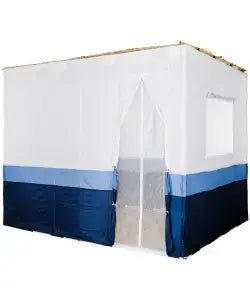
The question of how many walls must a sukkah have is a classic example of Talmudic reasoning. The absolute minimum is two full walls and a third partial wall (even as small as a handbreadth). However, the common practice, and the simplest way to ensure your sukkah is kosher, is to build it with three or four walls. These walls don’t have to be solid. You can use canvas, wood panels, or even bamboo fencing, as long as the material is sturdy enough that it won’t flap wildly in a normal wind. The goal is to create a sense of enclosure, a defined space that is separate from your everyday surroundings.
What Materials Can You Use to Build a Kosher Sukkah?
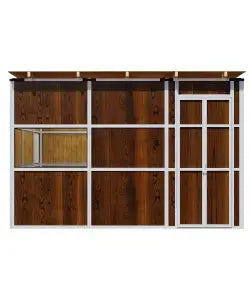
Not all materials are created equal when it comes to building a sukkah. According to halachic guidelines, walls must be made from materials sturdy enough to withstand normal wind — such as wood panels, plastic canvas, or bamboo fencing. For the roof, known as schach, only natural, unfinished materials may be used. This includes bamboo slats, palm branches, corn stalks, or certified schach mats. Metal, plastic, or anything that was processed for another use is not permitted. The key is that both the materials and the structure reflect the temporary, organic nature of the mitzvah.
How Long Does a Sukkah Stay Up for Sukkot
This is one of the easier rules. The mitzvah is to dwell in the sukkah for the seven days of the holiday (or eight days in the diaspora). So, how long does a sukkah stay up? At a minimum, it needs to be standing for the duration of the festival. Most people put up their sukkah in the days between Yom Kippur and the start of Sukkot and take it down shortly after the holiday ends. There’s no prohibition against leaving it up for longer, but the obligation to eat in it ends with the holiday.
Building a Sukkah on Chol Hamoed – What’s Allowed
Chol Hamoed refers to the intermediate days of the festival, the days that are not the full “Yom Tov” (holiday) at the beginning and end. The rules for these days are a bit more relaxed. But what if you haven’t finished your sukkah? Is building a sukkah on chol hamoed permitted? The general consensus is that you should avoid doing any major construction on these days if you can. However, if your sukkah was damaged or you were unable to build it before the holiday for reasons beyond your control, it is permissible to build or repair it on Chol Hamoed. The key is to do so in a way that is as minimally disruptive to the spirit of the holiday as possible. When it comes to the rules for building a sukkah, the guiding principle is always to do so in a way that enhances, rather than detracts from, the joy of the festival.
Ultimately, the laws of sukkah are not a barrier to entry; they are the blueprint for a meaningful experience. They provide a framework that connects your personal backyard sukkah to a chain of tradition stretching back millennia, ensuring that your celebration is both authentic and profound.
Ready to build a kosher sukkah? Sukkah Market has a wide variety of options, including the perfect sukkah kit for your needs. And if you have any questions about the rules or need guidance, feel free to contact Sukkah Market.
FAQs About Sukkah Construction Laws
Building a kosher sukkah doesn’t have to be overwhelming. Whether you’re working with limited space or just need a refresher on the halachic details, these common questions will help you prepare your sukkah in time for Sukkot 2026.
Can I build a sukkah on my apartment balcony?
Yes, you can—provided it’s under open sky and not beneath any permanent structure like an awning or roof. Your balcony sukkah must still meet all halachic requirements, including wall count and schach placement.
Do sukkah walls have to be solid?
No. The walls can be made of canvas, wood panels, bamboo fencing, or other sturdy materials. What matters is that they are stable and don’t sway significantly in the wind, maintaining the feeling of an enclosed space.
When can you build a sukkah for Sukkot 2026?
You may begin construction any time after Yom Kippur. Sukkot starts at sundown on Friday, October 2, 2026, so plan to have your sukkah fully built before then to start the holiday right.


